Web platform
Tesseract
Threat intelligence on your brand: phishing, lookalike domains, exposed assets, and mentions, with evidence attached to every finding.
See the platformWe don't rely on aggregated sources: we generate our own data.
Tesseract watches the web for what threatens your brand. Kosmos Safe Browsing already brings that protection to the browser, and the Antivirus comes next, to the computer.
Threat intelligence on your brand: phishing, lookalike domains, exposed assets, and mentions, with evidence attached to every finding.
See the platformWarns about and blocks malicious sites, such as phishing and scam pages, the moment someone tries to open them.
Meet the extensionDetects, blocks, and removes viruses and malware right on the computer.
 Chrome extensionNew
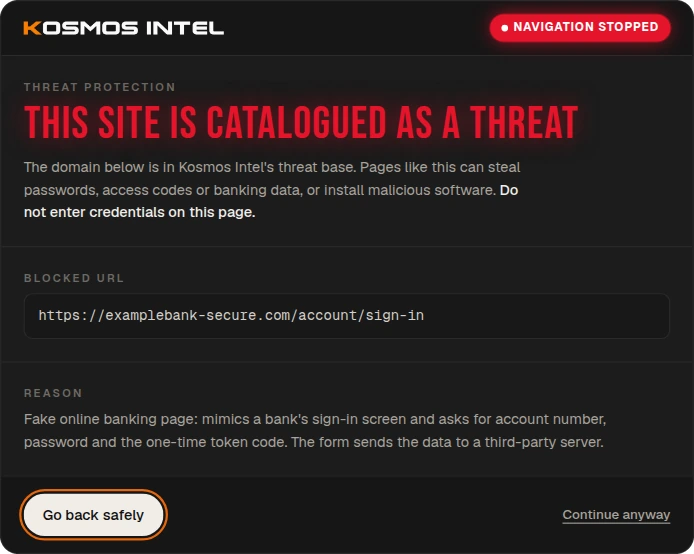
Warns you before the phishing page opens.
Every domain you visit is checked against the Kosmos Intel threat database. If it is catalogued, navigation stops before the page loads — and you see the blocked address and the reason.
Chrome, Edge, Brave and other Chromium-based browsers.

A consolidated view: event volume, IP rotation, reputation, and the domains that share infrastructure with you.
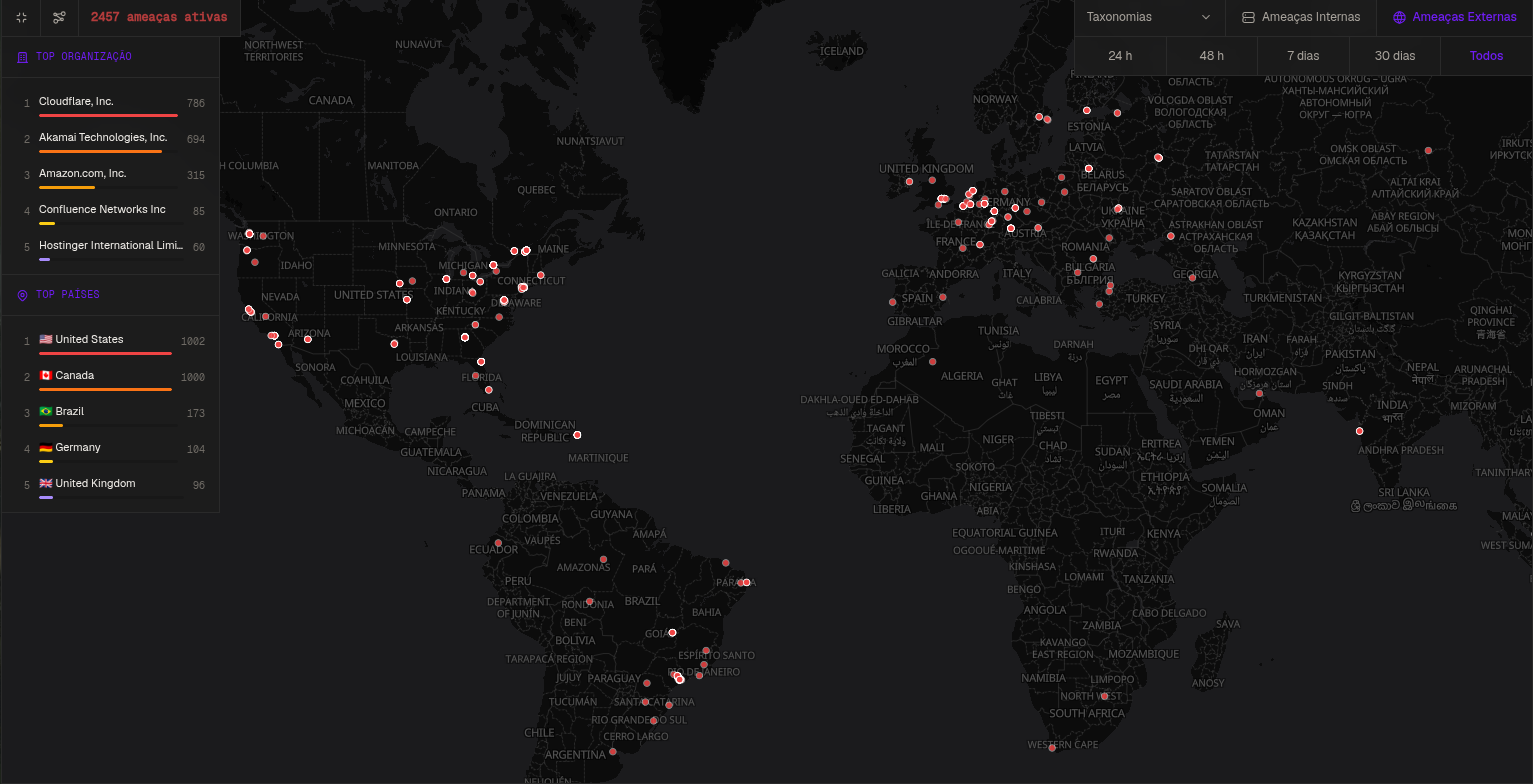
Where the threats come from: the country, organization, and provider behind every event, on the map.
Domains tied together by the same server, DNS, or DMARC — the whole campaign, not the isolated alert.
Your own subdomains, panels, and services left open on the internet, found without touching your environment.
Pages impersonating your brand to steal credentials, with a screenshot, the domain, and a verdict on every finding.
Registrations that look like yours, tracked from DNS all the way to the live page.
Fraud against your brand — fake apps, payment links, and campaigns — collected and classified in one place.
Pages hijacking searches for your brand to push casinos, fraud, and adult content.
Accounts posing as your brand or your people, with the network they live on and the evidence attached.
Code, credentials, and secrets published in repositories, with the type of exposure classified.
Posts that mention your brand negatively, from complaints and forums to court rulings.
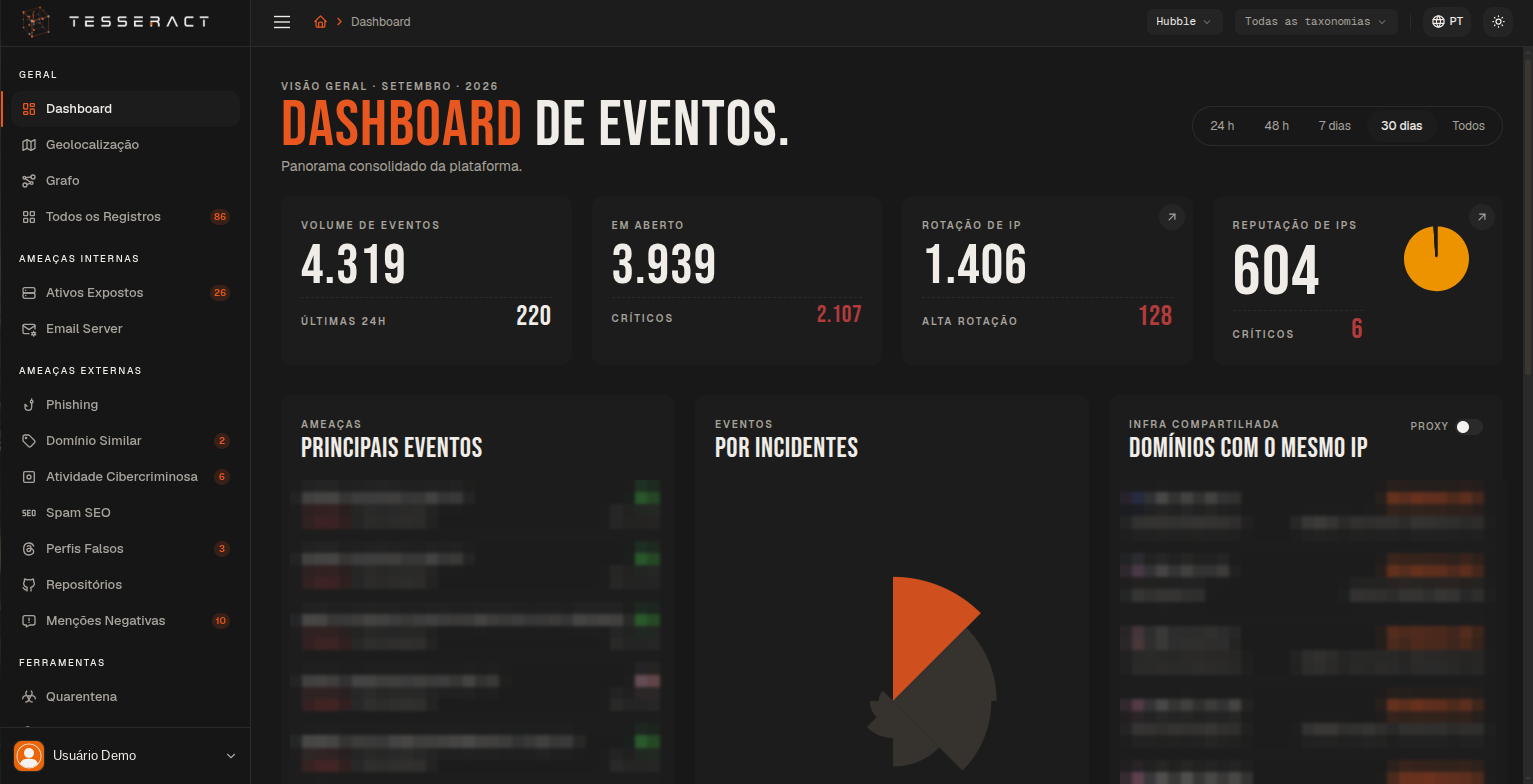
A consolidated view: event volume, IP rotation, reputation, and the domains that share infrastructure with you.
Ten panels over the same taxonomy, evidence attached to every finding, and nothing installed in your environment.
VirusTotal and Google answer about an address that already reached them. Tesseract starts from your brand.
| Who sees the phishing first | Tesseract | VirusTotal | Google Transparency |
|---|---|---|---|
| Watches your brand without being asked | does it | does not | does not |
| Catches the lookalike domain at registration | does it | does not | does not |
| Does not wait for someone to submit the URL | does it | does not | does it |
| Screenshot and context for the finding | does it | partly | does not |
| Ties the finding to the campaign (IP, ASN, DNS) | does it | partly | does not |
| Alerts you when it shows up | does it | does not | does not |
| Tracks it through takedown | does it | does not | does not |
| Goes beyond phishing | does it | does not | does not |
| Blocks the site in the visitor's browser | does it | does not | does it |
Comparison based on how each service publicly works. VirusTotal and Google are trademarks of their respective owners.
Internal threats, external threats, shared infrastructure, and brand reputation — on the same dashboard, with the same taxonomy.
Your external surface, inventoried on its own: forgotten subdomains, open admin panels, staging environments running in production.
SPF, DKIM, DMARC, and sending behavior audited — before someone signs messages in your name.
Pages published using your brand, detected as they go live and tracked through takedown.
Typosquatting and homoglyphs correlated with the IP, the ASN, and the registrant's history.
Keys, tokens, and configs leaked in public repositories, with the commit and author identified.
Fake profiles, SEO spam, and conversations about your company — prioritized by real reach, not volume.
You provide the domain. Tesseract does the rest — nothing to install, nothing touching your environment.
Book a technical callEvery finding enters a loop that never ends. Collection, enrichment, monitoring and reclassification repeat for as long as the asset exists — and keep running after it goes offline.
The event lands in the panel with evidence: phishing, lookalike domain, fake app or a profile impersonating you.
Everything the page carries is extracted and indexed — what the scam asks for and what it ships.
The asset keeps being checked from the outside: whether it is still live, where it points and who answers for it.
Every lap rewrites the risk: severity rises, drops or reopens, and the campaign is correlated again.
Taken down is not closed. The domain stays under dormant watch, and if it resolves again, changes IP or is registered by someone else, the same case reopens — with the whole history attached.
Initial report within 48 hours, with findings prioritized by risk and no commitment.